Immersive Art and Digital Installations
In the major Canadian cities, the role of immersive art has changed from formerly being niche exhibitions to more grandly executed environments. These are wonderfully experiential artworks, encompassing projection technology, sound design, and spatial storytelling, to offer multi-sensory journeys. These events almost always need to be closely monitored for the safety of the huge audience that filters through the darkness and/or interacts with different sections of the setup.
Immersive Van Gogh Exhibitions
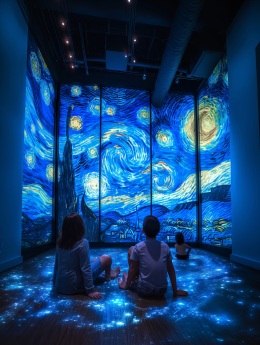
Immersive interpretations of the work of Vincent van Gogh have toured several Canadian cities, including Toronto and Montreal. These exhibitions surround visitors with floor-to-ceiling projections of paintings such as Starry Night and Sunflowers, animated through light and movement. Carefully synchronized music enhances the emotional impact without overwhelming the senses.
The format encourages slow exploration. Visitors can sit or walk freely, observing shifting brushstrokes at a monumental scale. Venues typically follow capacity limits and timed entry systems, which help maintain comfort and accessibility. For many, this style of exhibition makes classical art more approachable while respecting the integrity of the original works.
Digital Interactive Art Spaces
In cities such as Toronto and Vancouver, technology-driven art spaces present rotating exhibitions built around light, motion sensors, and generative visuals. These installations allow visitors to trigger visual effects through movement or touch, creating a sense of co-creation rather than passive viewing.
Safety considerations are central to these environments. Flooring, lighting transitions, and audio levels are carefully calibrated to prevent disorientation. Clear signage and staff supervision ensure that immersive design remains accessible to a broad audience, including families and school groups. The result is a controlled yet imaginative space where art feels participatory and inclusive.
Space and Science Immersion
Canada’s science institutions are increasingly focusing on experiential learning. Instead of static exhibits, lots of centers have been incorporating simulation, interactivity, and immersive theaters. These exhibitions often fulfill national education standards and public science education programs in a mix of fun and facts.
Space Galleries and Astronaut Exhibits
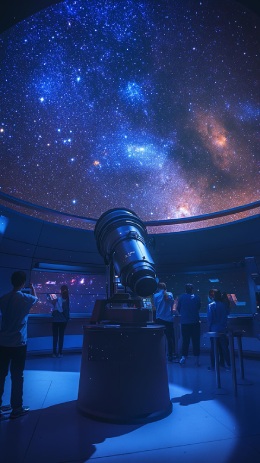
Major aviation and space museums in Canada highlight the country’s contributions to space exploration through immersive displays. Visitors can view artifacts related to robotic arms, satellite programs, and astronaut missions while exploring interactive modules that simulate aspects of space travel.
Simulated environments and audiovisual presentations place scientific achievements into context. Educational panels explain engineering principles and international collaboration, emphasizing transparency and evidence-based information. These institutions operate under rigorous preservation and visitor safety standards, ensuring both authenticity and accessibility for diverse audiences.
Planetariums and Dome Theaters
Planetariums in cities like Montreal, Vancouver, and Calgary boast immersive dome projections that simulate the night sky. These advanced projection systems articulate constellations, planetary motion, and deep-space imagery across domed, curved ceilings, making you feel as though you are traveling through the cosmos.
Commonly, the programs are devised in collaboration with astronomers and educators to reinforce the scientific groundings. These places are designed with in-built access solutions to make it easy for people to participate. They combine splendor with well-researched information for public facilitation, underscoring how good design is about engaging the public in a narrative that is both enriching and educational.
Nature as a Fully Immersive Experience
Canada’s geography also enriches this place with a unique perspective on a more wide-regional/national scale besides its myriad indoor-set art and novel installations. Large parks, quiet northern skies, and very switchable oceanide landscapes, these environments have contextualized experiences shaped by the environment, and not by a screen. Conservation codes and public acceptance guidelines work toward the ultimate protection of these sites while promoting responsible access for the general public.
Northern Lights in Yukon and Manitoba

Viewing the aurora borealis in the Yukon or northern Manitoba is one of Canada’s most memorable immersive experiences. Far from city lights, the sky transforms into shifting curtains of green and violet, shaped by solar activity and atmospheric conditions.
Tour operators in regions such as Whitehorse and Churchill often provide heated viewing shelters and guided explanations of the science behind the phenomenon. Safety planning is essential, particularly during extreme winter temperatures. Visitors receive guidance on clothing, transportation, and environmental respect, reinforcing that natural immersion requires preparation as well as appreciation.
Banff National Park and Lake Louise
Banff National Park and the iconic Lake Louise offer immersion through scale and stillness. Towering peaks, glacial lakes, and alpine trails create an environment that feels cinematic without artificial enhancement. Visitors can hike, canoe, or observe the landscape from designated viewpoints designed to manage foot traffic.
Park authorities regulate visitor numbers during peak seasons and maintain clear safety signage regarding wildlife encounters and rapidly changing weather conditions. These measures protect both travelers and ecosystems. Immersion here centers on presence and awareness, encouraging a slower and more attentive connection to nature.
Cultural and Historical Environments
Immersive experiences in Canada also emerge from cultural storytelling and historical reconstruction. Museums and heritage centers design spaces that recreate past environments or highlight living traditions. Increasingly, institutions collaborate with local communities to ensure respectful representation and adherence to cultural preservation standards.
Indigenous Cultural Centres
In Canada, visitors get a dichotomy between cultures nowadays - through many indigenous cultural centers - that differ in terms of close association with storytelling and reawakening a preserved history through an exhibition's case, artifacts, art, and interpretation. Exhibition objectives often couple old craftsmanship and contemporary media to foster a continuing transformation of cultures which can no longer be classified as once the old and the indigenous.
Many of these institutions operate under community leadership, ensuring that narratives remain accurate and respectful. Visitor guidelines may include photography policies and contextual information to safeguard cultural integrity. The immersive element lies in listening, learning, and engaging within environments grounded in authenticity and shared knowledge.
Historic Reenactment Villages
Living history sites recreate earlier centuries with costumed interpreters, restored buildings, and working crafts. Visitors can walk through functioning workshops or kitchens, observing daily life as it once unfolded in Canadian settlements.
Operational oversight ensures safety standards for demonstrations involving tools, animals, or fire.
Immersion with Purpose
The immersive experiences of Canada are as diverse as having been born in a technologically adorned museum, spread out on vast natural landscapes, or carved from the historical context of heritage sites. What binds these is the design thinking, regulation compliance, and safety standards maintained.